
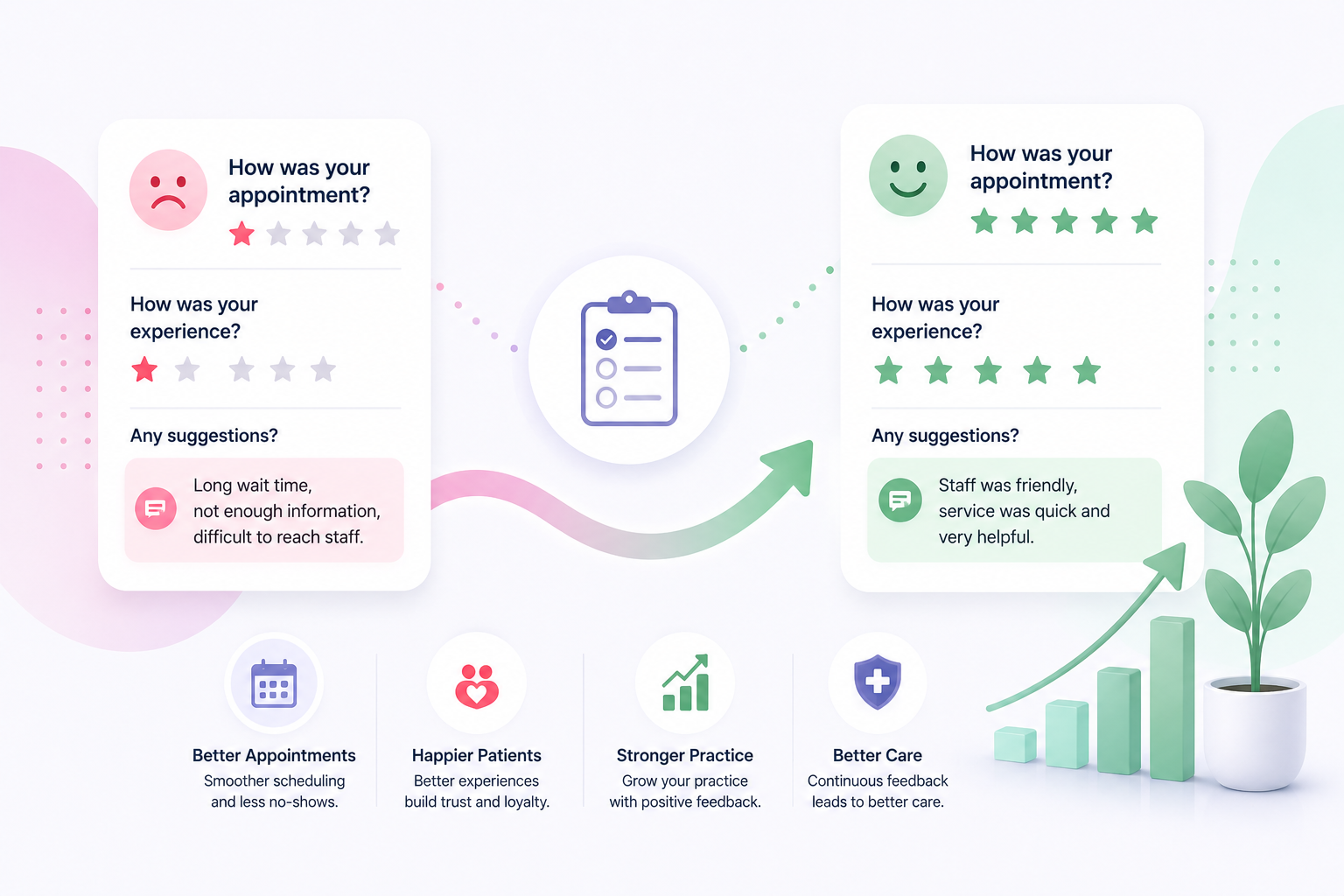
From Feedback to Better Care: How Patient Helps Medical Practices Grow
The Patient Left Happy Or So Everyone Thought
Anjali had visited the clinic for a routine consultation. The doctor listened carefully, answered her questions, and prescribed the necessary treatment. From a clinical perspective, everything went well. But as she walked out of the clinic, a few things still stayed on her mind.
She had waited almost 45 minutes beyond her appointment time. The reception area was crowded, and she wasn't sure how long the wait would be. Nobody asked about her experience before she left, so she simply went home.
A few months later, when she needed another consultation, she chose a different clinic. The original clinic never knew why. This happens more often than many healthcare providers realize. Patients don't always share their concerns directly. Sometimes they leave a review online. Sometimes they tell friends and family. And sometimes they simply don't return.
That's why patient feedback has become an important part of modern medical practice management.
Why Patient Feedback Matters
Every patient experiences a clinic differently.
While doctors focus on diagnosis and treatment, patients often remember the entire experience from booking an appointment to checking in at reception, waiting for their turn, and interacting with staff.
Even small issues can affect how patients feel about their visit. Long waiting times, unclear communication, difficulty booking appointments, or delays in receiving reports can all influence the overall patient experience. Without feedback, clinics may never know these problems exist.
Patient feedback gives healthcare providers a better understanding of what is working well and what could be improved.
Valuable Insights Often Come From Simple Questions
Many clinics assume patients will speak up if something is wrong. In reality, many patients don't. Patients are often reluctant to complain directly. Some don't want to create an uncomfortable situation, while others simply feel their concerns are too minor to mention. However, when clinics actively ask for feedback, patients are usually willing to share their experiences.
Simple questions such as:
How was your overall experience?
Was the appointment process easy?
Were waiting times reasonable?
Would you recommend the clinic to others?
can reveal valuable insights that might otherwise go unnoticed.
Over time, these responses help clinics identify patterns and make informed decisions about improving patient care.
Better Feedback Leads to Better Patient Experiences
Patient feedback isn't just about identifying problems. It's also about understanding what patients appreciate. Positive feedback helps clinics recognize what they are doing well and encourages staff members who work hard to provide quality care.
At the same time, constructive feedback helps healthcare teams address issues before they become bigger concerns.
For example, if several patients mention long waiting times, clinic administrators can review scheduling processes. If patients report difficulty contacting the clinic, communication methods may need improvement. Sometimes, even small improvements based on patient feedback can make a noticeable difference in the patient experience.
Making Feedback Easy for Patients
One reason clinics struggle to collect feedback is that the process isn't always convenient. Patients are far more likely to respond when feedback requests are simple and accessible.
Digital feedback forms, follow-up messages, patient portals, and mobile-friendly surveys make it easier for patients to share their opinions without taking much time. The easier it is to provide feedback, the more valuable insights clinics can gather.
Modern healthcare practices are increasingly using digital tools to collect and organize patient feedback, helping them better understand patient expectations and improve service quality.
Turning Insights Into Growth
Patient feedback does more than improve individual experiences. It also supports long-term growth. When patients feel heard, they are more likely to trust their healthcare providers, return for future consultations, and recommend the clinic to others.
In an increasingly competitive healthcare environment, patient satisfaction plays an important role in building a strong reputation. Clinics that regularly listen to patient feedback can make better decisions, improve operational efficiency, and create experiences that encourage patient loyalty.
Conclusion
Patient feedback is one of the most valuable resources a medical practice can have. It helps healthcare providers understand patient experiences, identify areas for improvement, and deliver better care over time.
The most successful medical practices don't just treat patients; they listen to them. Because sometimes the insights that help a clinic grow don't come from reports or statistics. They come directly from the people it serves every day.

0 Comments